Living In Duarte: Commuting, Foothills, And Housing Options
April 23, 2026
April 23, 2026
Wondering what it’s actually like to live in Duarte? If you are weighing a move in the San Gabriel Valley, Duarte stands out for a reason: you get a foothill setting, practical commuting options, and a housing mix that is broader than many buyers first expect. Whether you are searching for a detached home, a townhome near transit, or an investment-minded property, understanding how Duarte works day to day can help you make a smarter move. Let’s dive in.
Duarte is a compact city in the San Gabriel Valley with an estimated population of 23,493 and just 6.71 square miles of land, according to the U.S. Census QuickFacts for Duarte. That smaller footprint can be appealing if you want a city that feels manageable while still connecting to the larger Los Angeles region.
The numbers also give useful context for everyday living. Current Census data shows a 61.0% owner-occupied housing rate, a median owner-occupied home value of $779,400, a median gross rent of $2,105, and an average commute time of 30.3 minutes. Those figures do not tell the whole story, but they do help frame what buyers, renters, and sellers may expect in Duarte.
For many people, commuting is one of the first things to evaluate before choosing a city. Duarte offers a mix of rail, local transit, bike access, and freeway connectivity that can support different routines.
One of Duarte’s biggest transportation advantages is the Duarte/City of Hope Station on Metro’s A Line. Metro’s A Line information shows that the line runs from Pomona to Long Beach, which gives riders a direct regional rail option without relying only on freeway travel.
The station also works as a park-and-ride stop. Metro lists 125 paid parking spaces and 3 EV charging stalls at the station, which can make transit more realistic if you are not within walking distance.
Beyond rail, Duarte also supports local connections. The city states that it contracts with Foothill Transit to operate the all-electric Duarte eBus Line 861 and local transportation resources, and it also sells TAP cards for use on Metro and other regional agencies.
That kind of local support can be helpful for routine errands, first-mile and last-mile trips, or households trying to reduce car dependence for some parts of the week. Even if you still drive most days, having more than one option can make daily life easier.
If you like combining transit with walking or biking, Duarte has planning in place to support that. The city’s Bike and Pedestrian Master Plan focuses on first-mile and last-mile access to the Duarte/City of Hope station.
That same plan notes that the 1.1-mile Emerald Necklace Bike Trail connects the San Gabriel River Bike Trail to the station. This is a meaningful detail because it ties recreation and transportation together instead of treating them as separate systems.
Duarte’s commuting story is not just about transit. A city technical report explains that the Foothill Freeway, now the 210 Freeway, shaped residential growth in Duarte.
For today’s residents, that history still matters. It helps explain why Duarte remains part of a familiar east-west circulation pattern for people traveling through the San Gabriel Valley and into other parts of Los Angeles County.
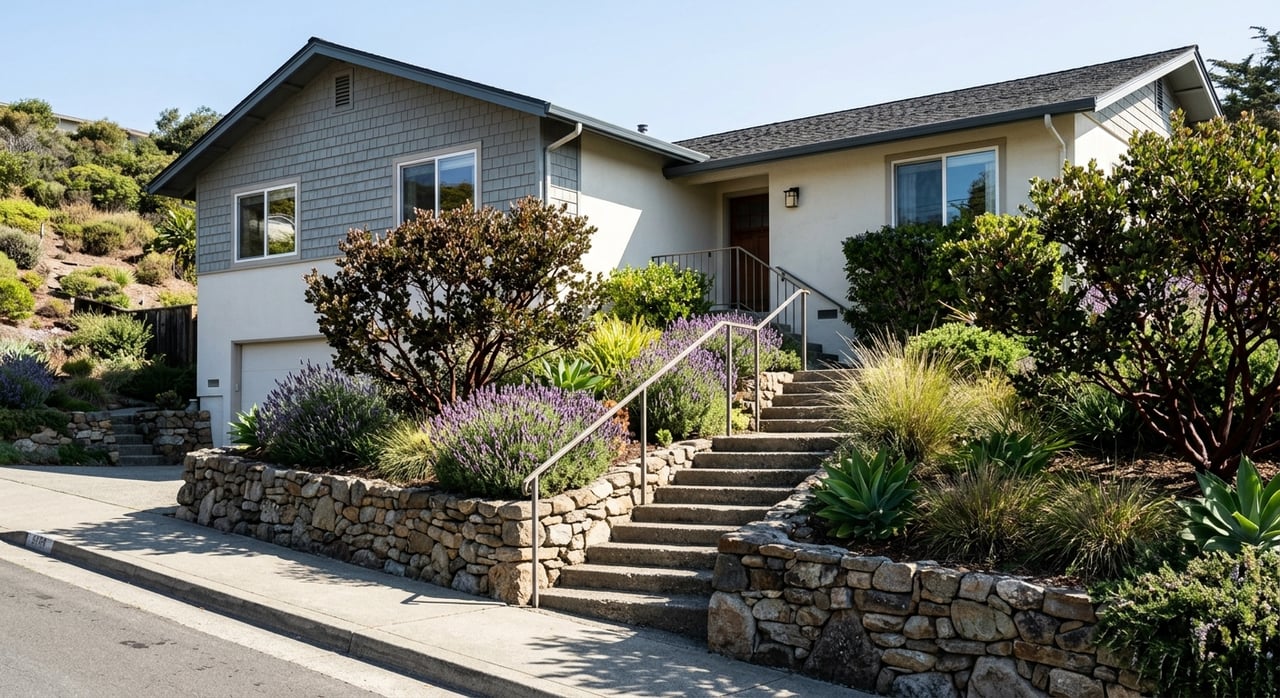
Duarte’s foothill location is not just a nice phrase in marketing copy. It shows up in city planning, trail access, and even practical issues like wildlife awareness.
The city’s own materials reference wildlife indigenous to the foothills of Duarte, and Duarte’s development rules include hillside standards. That tells you the landscape is a real part of how the city functions.
For many buyers, that foothill context adds visual appeal and a different sense of place than flatter, more uniform parts of the region. It can also influence how you think about property upkeep, lot characteristics, and the relationship between residential areas and open-space corridors.
Lifestyle is not only about your home. It is also about what you can access nearby on a regular basis.
Duarte’s Parks and Recreation Department says the city provides services through eleven neighborhood parks, two sports parks, a skate park, a fitness center, pools, a Senior Center, a Teen Center, and two recreational trails. It also highlights a community garden at Tzeitel Paras-Caracci Park.
That kind of public amenity network can make a compact city feel more usable. Instead of needing to leave town for every activity, you have multiple everyday recreation options woven into the local map.
A good example is Duarte Park, which includes barbecue areas, lighted basketball courts, futsal courts, picnic space, playground equipment, restrooms, and a multi-purpose classroom or camp building. For buyers comparing cities, details like these help turn a map search into a real sense of how weekends and evenings might look.
One of the most important things to understand about Duarte is that its housing stock is more varied than a simple drive-through may suggest. If you assume it is only a city of detached houses, the planning documents tell a fuller story.
Duarte’s 2021-2029 housing element and zoning code show a wide range of housing types, including single-family homes, duplexes, multi-family dwellings, manufactured housing, accessory dwelling units, single-room occupancy, transitional and supportive housing, emergency shelters, and employee housing, according to the city housing element reviewed by the California Department of Housing and Community Development.
The city also uses several specific plans, including Las Posadas, Buena Vista Villas, Spanish Oaks Villas, Duarte Station, Duarte Town Center, and City of Hope, to enable more flexible land use and a variety of development types. For buyers and sellers, that means Duarte is not one-note. Different parts of the city can offer different product types and development patterns.
If you are shopping for a home in Duarte, you will likely encounter older housing stock. The housing element reported 7,360 total housing units, with 91% of the housing stock built before 1989.
That can create both opportunities and questions. Older homes may offer established layouts, mature surroundings, and value-add potential, but age, maintenance history, and renovation needs can matter more than they might in a newer master-planned area.
For sellers, this is especially relevant. The same housing element estimated that about one-quarter of the city’s owner-occupied homes that were more than 30 years old needed structural rehabilitation improvements. In practical terms, preparation, pricing, and property condition can play a major role in how a listing is positioned.
Duarte also includes more recently developed housing options. The housing element points to projects such as Third Street Townhomes, Oliva Townhomes, the 161-unit Duarte Town Center Mixed-Use project, the Residences at Duarte Station with 636 apartments total, a 16-unit apartment project at 928 Huntington Drive, and a 20-unit condominium project at 1401 Santa Domingo Drive.
This mix matters because it gives buyers more entry points into the city. If a detached home is not the right fit for your budget or lifestyle, a townhome, condo, or apartment-oriented area may offer a different path.
The area around Duarte Station is a key part of the city’s future housing story. The Duarte Station Specific Plan information referenced in the housing element notes that the plan was amended in 2019 to increase multi-family capacity to as many as 1,400 units and frames the area as a mixed-use transit village with high-density housing, office, retail, hospitality, and urban green space.
If you are looking for a more transit-oriented living pattern, this is one of the most important areas to watch. It also gives sellers and investors valuable context for how Duarte is evolving over time.
If you are thinking about buying in Duarte, it helps to go in with a clear sense of priorities. The city can appeal to different types of buyers, but the right fit depends on how you want to live.
You may appreciate Duarte if you want:
As you compare homes, pay close attention to the age of the property, maintenance history, layout, and proximity to transit or trail connections. In a city with a large share of older housing, those details often matter as much as square footage.
If you are preparing to sell in Duarte, your property needs to be understood in the context of the city’s broader housing mix. Buyers may be comparing your home not only to other detached properties, but also to townhomes, condos, and newer mixed-use or station-area options.
That makes positioning especially important. Depending on the property, buyers may respond to things like lot use, updates, condition, access to the A Line, or proximity to parks and everyday services.
For owners of older homes, presentation can make a real difference. Since much of Duarte’s housing stock predates 1989, buyers may be looking closely at maintenance, improvements, and long-term upkeep.
Duarte offers a combination that is not always easy to find in one place: foothill character, useful transit connections, and a housing market that includes both established neighborhoods and growing higher-density areas. It is a city where the landscape, transportation network, and development pattern all shape the experience of living there.
If you are trying to decide whether Duarte fits your goals as a buyer, seller, or property owner, local guidance can help you sort through the details that matter most. When you are ready to talk through Duarte housing options, neighborhood patterns, or selling strategy, connect with Art Del Rey Realty Inc..
Stay up to date on the latest real estate trends.
Real estate can be very personal and listening to the needs of my clients is my top priority. Contact me today!