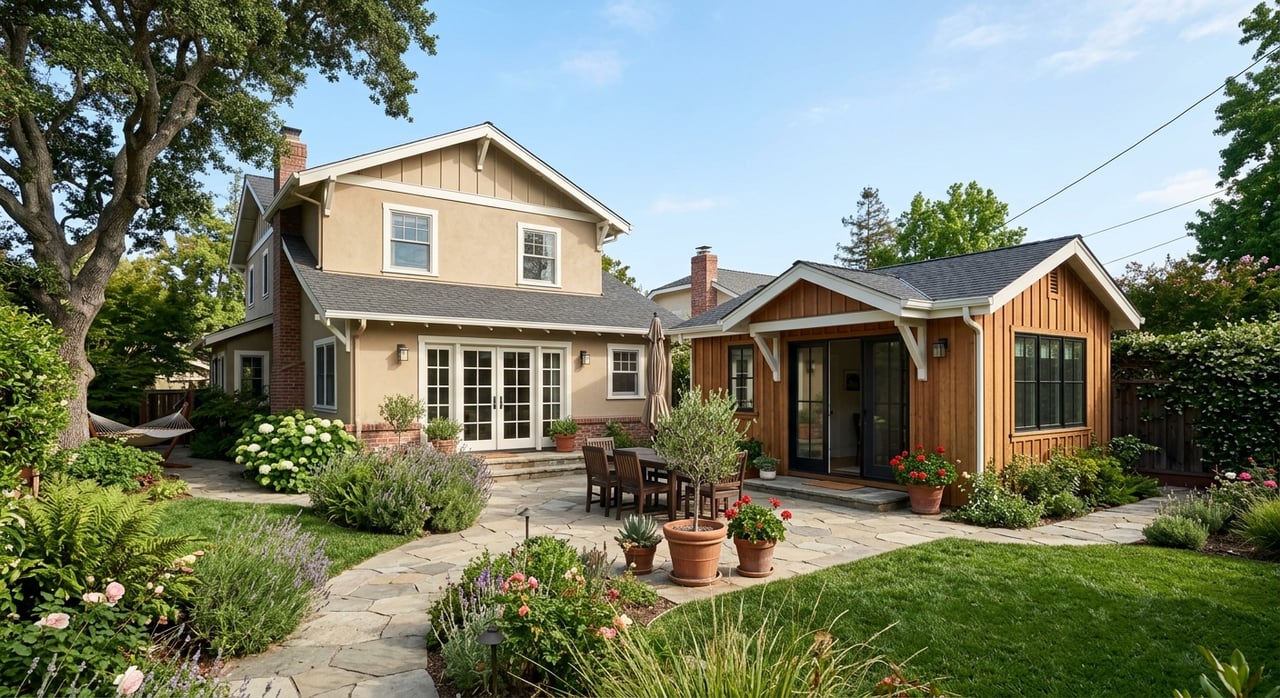
San Gabriel ADU and Multigenerational Home Options
April 16, 2026
April 16, 2026
Looking for a home in San Gabriel that can flex with your life? If you are thinking about space for extended family, room for a caregiver, or the possibility of future rental income, homes with ADU potential deserve a closer look. In San Gabriel, the mix of household size, aging-in-place needs, and California’s ADU-friendly rules makes this a practical option for many buyers and owners. Let’s dive in.
San Gabriel is a strong fit for homes with accessory dwelling units, or ADUs, and multigenerational layouts. According to the U.S. Census Bureau QuickFacts for San Gabriel, the city has 12,612 households, an average of 3.00 persons per household, and 19.0% of residents are age 65 or older. Those numbers help explain why flexible housing options matter here.
For many households, the goal is not just extra square footage. It is about creating privacy, supporting family members at different life stages, and making smarter use of the property you own or want to buy. In a city like San Gabriel, that can make an ADU or JADU especially appealing.
California has also moved ADUs into the mainstream. The California HCD 2026 ADU Handbook reports that ADU permits statewide grew from 1,336 in 2016 to 30,354 in 2024, and ADUs accounted for more than 26.6% of all homes permitted in California in 2024. That is a major shift, and it shows how important these units have become for both family flexibility and housing supply.
An ADU is a secondary housing unit on the same lot as a primary home. It can be detached, attached, or created by converting existing space like a garage. Depending on the property, it may serve as living space for relatives or as a long-term rental.
A JADU, or junior accessory dwelling unit, is smaller and more limited. Under the state handbook, a JADU can be up to 500 square feet and must be contained entirely within a single-family residence. It usually includes an efficiency kitchen, and in some setups the owner must live in either the main home or the JADU.
San Gabriel updated its ADU and JADU regulations on April 16, 2024, and the city says the rules apply to properties in all residential zones. You can review the city’s official San Gabriel ADU page for application details and local guidance. That broad zoning reach is helpful because it means ADU potential is not limited to just a few pockets of the city.
The city also notes that ADU applications are submitted to the Planning and Community Development office by email. Once a completed application is received, the city must act within 60 days and handle it ministerially, without discretionary review or a public hearing. For buyers and owners, that can make the process more predictable.
For detached new-construction ADUs, San Gabriel’s ordinance materials outline several key standards. The city generally allows up to 850 square feet for a studio or one-bedroom detached ADU and up to 1,000 square feet for a two-bedroom detached ADU. Detached ADUs are generally limited to 16 feet in height, with four-foot side and rear setbacks, according to the city’s ADU zone text amendment materials.
State rules matter too. The HCD handbook explains that local agencies generally cannot require owner occupancy for an ADU, except in limited separate-conveyance situations. It also states that ADUs and JADUs generally must be rented for terms longer than 30 days, which means short-term rentals are typically not allowed under standard local frameworks.
This is often the most space-efficient multigenerational option. A JADU sits within the existing single-family home, which makes it a practical fit when you want a private area for an aging parent, adult child, caregiver, or another household member.
Because the JADU stays inside the home, it can be a smart solution when the lot itself does not have much extra yard space. State guidance also says JADUs do not require parking, which can simplify planning.
A garage conversion is one of the most common ADU paths, especially in established neighborhoods with older homes. Instead of building from scratch, you use an existing accessory structure and turn it into legal living space.
That approach can lower some construction complexity and preserve more of the yard. It is also attractive because, under the state handbook, if a garage, carport, or covered parking structure is demolished or converted for an ADU, replacement parking cannot be required.
If the lot has enough rear-yard depth, a detached ADU can offer the most privacy. This layout often works well when two households want a little separation while still living on the same property.
In San Gabriel, detached ADUs usually need to fit the city’s height, setback, and size standards. For buyers, this means lot shape and available backyard space can be just as important as the square footage of the main house.
ADU potential is not limited to single-family homes. The HCD handbook says local agencies must allow at least one ADU within an existing multifamily dwelling and up to 25% of the existing multifamily units. On some multifamily lots, state law may also allow detached ADUs, subject to state limits.
That can make duplexes, apartments, and other multifamily properties worth a closer look for owners and investors seeking additional flexibility. In the right case, these properties may offer more options than buyers first expect.
Not every property has the same ADU potential, so it helps to know what to look for before you buy or sell. In San Gabriel, the strongest candidates are often homes with a garage, existing interior space that can be reworked, or a deep backyard that can support detached construction.
A practical first step is confirming that the property is in a residential zone and already has an existing single-family or multifamily dwelling. Then you want to look at whether the site can accommodate the city’s size, setback, and height rules. The San Gabriel ADU page is a helpful place to start for those local requirements.
Conversions can be especially valuable on compact lots. According to the HCD handbook, ADUs created within existing living area or existing accessory structures generally need no setbacks. That is one reason older homes with detached garages or underused interior space can be so interesting in San Gabriel.
Multigenerational living is not a niche idea. The U.S. Census Bureau reported that 7.2% of U.S. family households were multigenerational in 2020. In markets like San Gabriel, that trend aligns well with the need for flexible housing and privacy under one property umbrella.
For buyers, this kind of layout can support several life situations:
The benefit is often flexibility. Even if your needs change over time, a property with ADU potential may adapt better than a home with a more fixed floor plan.
If you are selling a San Gabriel property with an existing ADU, JADU, garage conversion, or clear development potential, that feature may matter to a wide range of buyers. Some are focused on family use, while others are thinking about long-term income or future flexibility.
The key is to present the opportunity accurately. Sellers should be careful to distinguish between a fully permitted ADU, a space with possible conversion potential, and an unpermitted unit that may require further review. Buyers will want clarity, and clear documentation builds confidence.
Permit history is especially important. The HCD handbook says local agencies generally may not deny a permit for an unpermitted ADU or JADU built before January 1, 2020, solely because it violates building standards or local ADU rules, unless there are health and safety issues. Even so, a buyer should understand what work or corrections may still be needed before a space is recognized as legal dwelling area.
Cost depends heavily on the type of ADU. A garage conversion, interior conversion, and detached new-build will each have different design, construction, and permit costs. The property itself also matters, especially if utility upgrades or site work are needed.
There are a couple of rule-based budget points that can help. The HCD handbook says ADUs that are 750 square feet or less, and JADUs of 500 square feet or less, are exempt from impact fees, while larger units are charged proportionately. That can make smaller units more attractive from a planning standpoint.
Timing matters too. San Gabriel’s process is ministerial, and the city must act on a completed ADU or JADU application within 60 days. That does not mean construction happens overnight, but it does provide a clearer approval timeline once your application is complete.
When you tour homes in San Gabriel, it helps to think beyond the current layout. A two-bedroom home with a detached garage or underused interior area may offer more long-term value than a larger home with no flexibility. In the same way, a multifamily property may deserve a second look if interior or detached ADU options are available under state and local rules.
This is where neighborhood-level experience matters. You want to compare the lot, the existing structures, the likely use case, and the local rules before assuming a property can or cannot support an ADU plan. The right home is often the one that fits both your current needs and what your household may need next.
If you are weighing San Gabriel homes with ADUs or multigenerational potential, working with a local brokerage that understands residential property, income property, and long-term ownership strategy can make the search much more focused. To talk through your options, connect with Art Del Rey Realty Inc..
Stay up to date on the latest real estate trends.
Real estate can be very personal and listening to the needs of my clients is my top priority. Contact me today!