Arcadia Rental Market Guide for Small Landlords
June 11, 2026
June 11, 2026
Wondering how to make sense of Arcadia’s rental market when you only own one house, a duplex, or a few units? You are not alone. Small landlords in Arcadia have to balance pricing, upkeep, lease structure, and California rules, all while trying to protect cash flow and avoid preventable headaches. This guide breaks down the local basics so you can make clearer, more confident decisions. Let’s dive in.
Arcadia is still largely a single-family housing market. According to the city’s housing element, about 70% of housing units were single-family in 2021, while about 30% were multifamily. Within that multifamily share, roughly 6% were in 2-to-4-unit properties and 24% were in 5-plus-unit buildings.
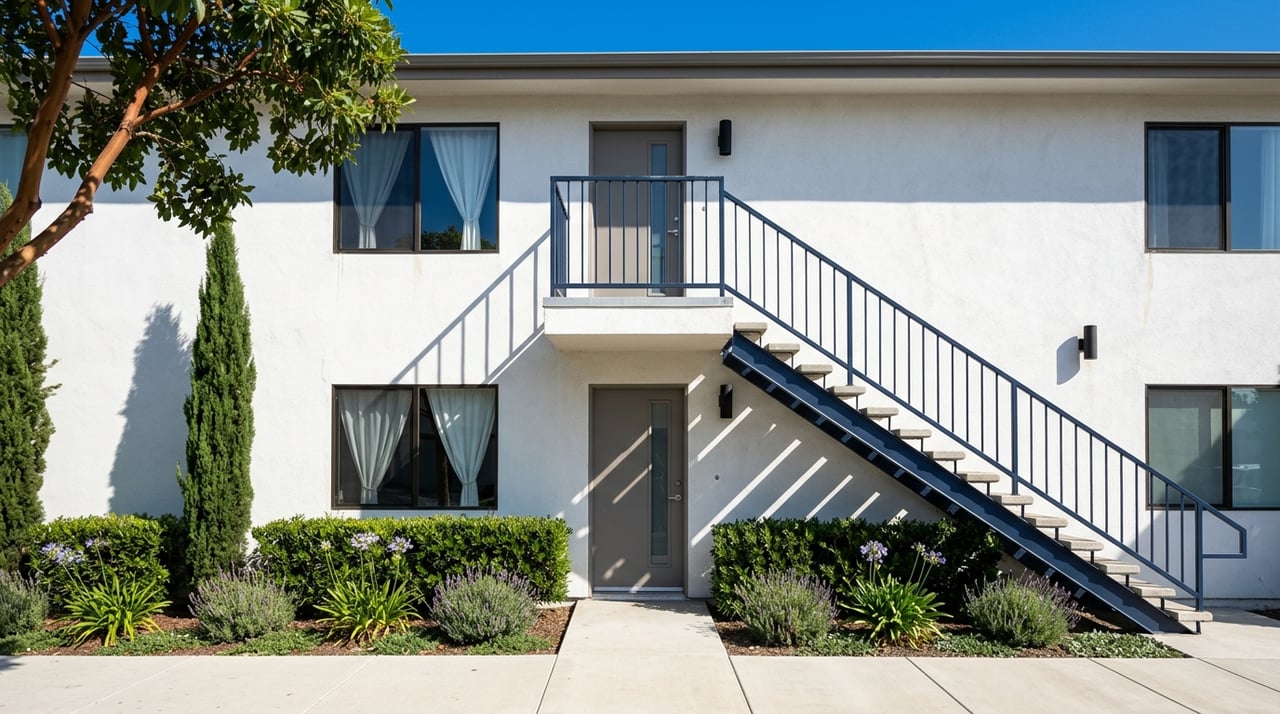
That matters because many local landlords are not operating large apartment communities. You are more likely to own a rental house, townhome-style property, duplex, fourplex, or a smaller apartment building. In practical terms, your leasing, maintenance, and reserve planning may look very different from an institutional owner’s playbook.
Arcadia also has a meaningful share of older housing. The city reports that about 46.21% of housing units were built before 1970. If you own an older property, routine repairs and periodic upgrades are not side issues. They are part of the business model.
Older units can require more plumbing, electrical, roofing, and system-related attention over time. Even if your property presents well today, it is smart to plan for ongoing capital work instead of treating repairs as rare surprises.
Arcadia allows accessory dwelling units on lots with a primary residence. The city defines an ADU as a complete independent living space on the same parcel as a single-family or multifamily dwelling.
For small landlords, that can create different ownership setups, such as a house plus ADU or a multifamily property plus ADU. If you have this type of property, your rental strategy may involve separate leases, separate maintenance planning, and careful pricing based on each unit’s size, condition, and features.
If you are thinking about rental strategy in Arcadia, the city’s rules make one thing very clear. Short-term rentals, home-sharing, and even advertising those uses are strictly prohibited. Renting a room or an entire residence for fewer than 28 consecutive days is not allowed.
That means most small landlords in Arcadia should focus on traditional long-term leasing. Your decisions around rent, tenant retention, turnover timing, and property condition matter more when you are building around stable occupancy rather than short-stay income.
California law distinguishes between fixed-term tenancies and periodic tenancies. A fixed-term lease lasts for a set period, such as six months or one year. A periodic tenancy, often month-to-month, continues until proper notice is given.
For many small landlords, a fixed term offers better income predictability. You know the rent amount, the expected occupancy window, and the likely timing for renewal discussions. This can be especially helpful when you are budgeting mortgage payments, insurance, taxes, and maintenance.
Month-to-month arrangements offer more flexibility, but they are not a free-form option. They still come with legal rules, and in covered units, just-cause protections may still apply. Also, if a tenancy is for more than one year, California requires that term to be in writing.
The best lease structure often depends on your goals and your property type. A few general considerations can help:
In a market like Arcadia, where many landlords own just one or a few rentals, the lease term you choose can shape both your day-to-day stress level and your long-term returns.
Arcadia’s housing element reported a 4.0% rental vacancy rate in 2019. It also cited an 8.7% overall vacancy rate in 2019 and a 6.3% overall vacancy rate from the California Department of Finance in January 2021.
The city notes that some vacancy is normal because people move. Still, lower vacancy generally means more competition for available housing and can put upward pressure on housing costs. For landlords, that can support stronger demand, but it does not remove the need for realistic pricing and good property presentation.
Arcadia’s Census QuickFacts page shows a median gross rent of $2,191 for 2020 through 2024. Zillow’s current Arcadia rentals page shows an average rental price of $2,994 based on listing data. These numbers are not directly comparable, but together they give you a broad range for thinking about the market.
A better way to evaluate rent is to compare your unit against recent local comps with a similar property type, condition, size, and layout. Broad data points can help with context, but they should not replace a comp-based review of your specific rental.
It is easy to overfocus on one market statistic. In reality, rent setting should start with the unit itself. A remodeled single-family home will not compete with an older apartment in the same way, even if both are in Arcadia.
When evaluating rent, pay close attention to factors such as:
California law also matters here. In covered units, the initial rental rate for a new tenancy is not capped by the state rule cited in the research, but later increases during the tenancy may be capped. That makes starting rent an important decision, especially if you are weighing market rent against the value of longer tenant retention.
Arcadia does not have a locally adopted rent control or rent stabilization ordinance, according to the city. Instead, many rentals are governed by California’s Tenant Protection Act.
The city states that this law generally caps annual rent increases at 5% plus CPI, or 10%, whichever is lower. It also generally requires just cause for terminating a tenancy after 12 months of lawful occupancy. The city further notes that some units are exempt, including housing with a certificate of occupancy issued within the previous 15 years and some separately alienable single-family homes or condos owned by natural persons rather than corporations or REITs.
Because exemptions and notice requirements can be fact-specific, small landlords should be careful before assuming a property is outside the law. Arcadia’s housing-assistance page says the city contracts with the Housing Rights Center to provide free tenant-landlord related assistance, which can be helpful if you are unsure about notices, exemptions, or fair housing questions.
California also has written notice rules for rent increases. For ordinary month-to-month changes, at least 30 days’ written notice is generally required. If the increase exceeds 10% over a 12-month period, at least 90 days’ written notice is generally required.
Just as important, a call, text, or email alone is not enough. For a small landlord, this is a good reminder that strong documentation is not optional. It is one of the simplest ways to reduce risk.
Security deposits are not just an administrative detail. They are part of your move-in and move-out cash-flow planning.
California generally limits a residential security deposit to one month’s rent, with a narrow higher-deposit exception for certain natural-person or qualifying LLC small landlords. Lawful deductions are limited to items such as unpaid rent, damage beyond ordinary wear and tear, and necessary cleaning or restoration.
You must also return the remaining deposit, along with an itemized statement, within 21 days after the tenant moves out. For small landlords, careful records, photos, and organized move-out documentation can make this process much smoother.
One of the biggest mistakes small landlords make is underwriting as if every month will be fully occupied and every expense will be minor. That is rarely how rental ownership works over time.
A realistic reserve should account for vacancy, turn costs, and routine maintenance. In Arcadia, where a substantial share of housing stock is older, that cushion is especially important. Even well-kept properties can face sudden repair needs between tenants or during occupancy.
Rental operating costs can include a wide range of items. The research report identifies common categories such as:
The research also notes that repairs and improvements are usually treated differently for tax purposes. Even if you work with an accountant on the back end, it helps to track expenses clearly from the start.
Some landlords enjoy being hands-on. Others find that the job grows more demanding once legal notices, inspections, maintenance coordination, bookkeeping, and move-out documentation all start stacking up.
Professional management may make more sense if you own multiple units, live outside the area, have a demanding day job, or simply want tighter systems around leasing and compliance. For a small landlord in Arcadia, that can mean less operational friction and more consistency from one tenancy to the next.
A local firm with leasing and full property management experience can also help you connect market pricing with practical day-to-day execution. That is often where small landlords save the most time and avoid the most expensive mistakes.
If you want help evaluating your Arcadia rental, setting a realistic lease strategy, or deciding whether hands-on ownership still fits your goals, Art Del Rey Realty Inc. is here to help with local leasing insight and full property management support.
Stay up to date on the latest real estate trends.
Real estate can be very personal and listening to the needs of my clients is my top priority. Contact me today!